From restaurant menus and product packaging to trade show booths and corporate billboards, Quick Response (QR) codes have become an indispensable bridge connecting physical interactions to the digital world. Yet, one of the costliest mistakes businesses make when launching a print campaign is choosing the wrong type of code: dynamic QR code vs static QR code.
Imagine printing 5,000 product brochures or packaging labels, only to discover a typo in the destination URL or a discontinued landing page. With a static QR code, those 5,000 printed materials are ruined forever. With a dynamic QR code, you can update the destination URL in seconds without reprinting a single page.
In this guide, we will unpack how both QR code formats function under the hood, compare their capabilities across critical dimensions, and help you select the ideal solution for your next campaign using our free QR code and short link generator.
What Is a Static QR Code?
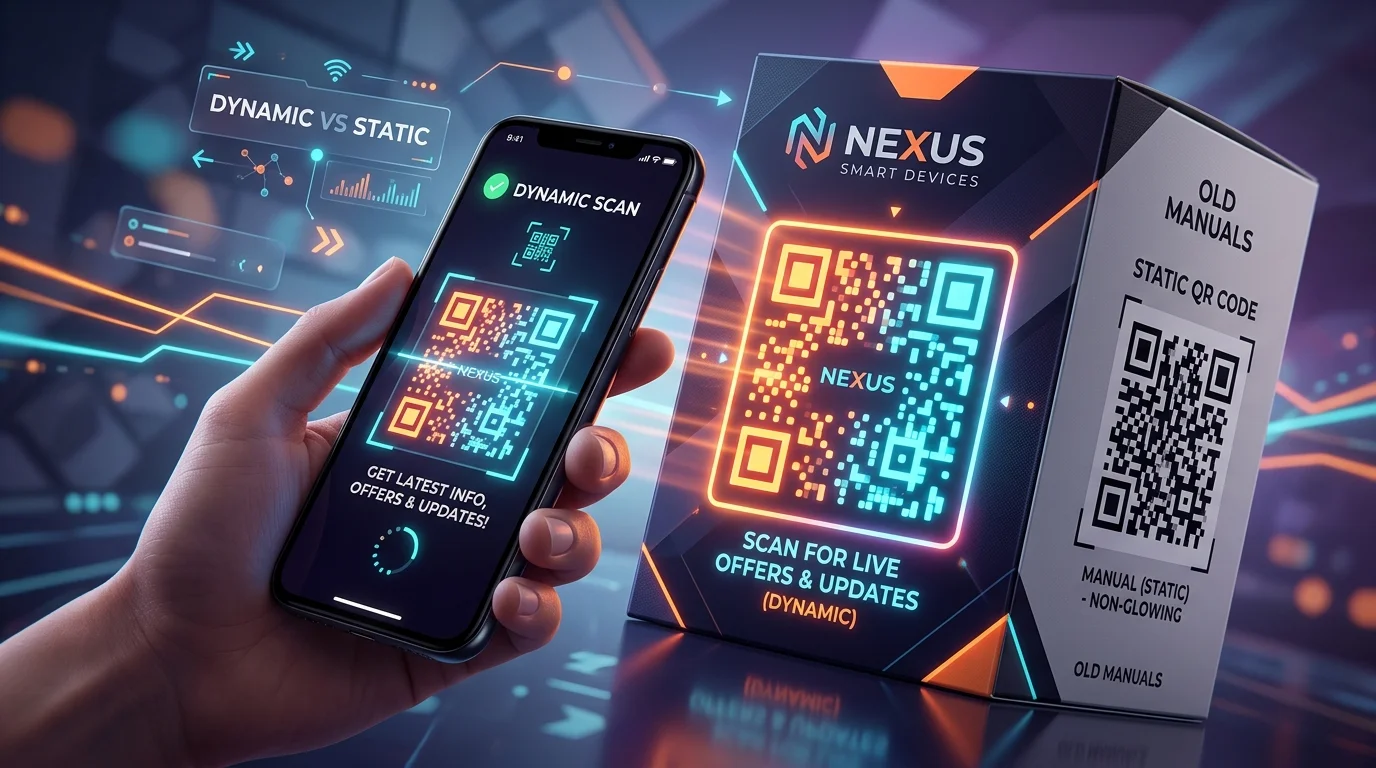
A static QR code encodes your target information directly into the physical matrix pattern of black-and-white modules. When a smartphone camera scans the code, the scanner reads the raw data embedded within the pixels and executes the instruction immediately.
Because the destination URL, Wi-Fi password, or plain text is hardcoded into the graphic itself:
- Permanent Data: The destination cannot be changed once the code is generated.
- Pixel Density Increases with Content: The longer the target URL or text, the denser and more complex the QR code pattern becomes. High-density static codes are harder for mobile cameras to scan from a distance or under dim lighting.
- Zero Tracking Capabilities: Static QR codes cannot track who scanned the code, when the scan occurred, what device was used, or where the user was located.
Static QR codes are suitable for permanent, unchanging data—such as personal Wi-Fi network credentials for home guests or fixed cryptocurrency wallet deposit addresses.
What Is a Dynamic QR Code?
A dynamic QR code does not encode your final landing page URL directly into the pixel grid. Instead, it encodes a streamlined, short redirect URL that passes the visitor through an intermediate routing server before immediately forwarding them to the final destination.
This subtle technical distinction unlocks massive advantages for marketers, educators, and enterprise operations:
- Real-Time Destination Editability: You can redirect the QR code to a completely new landing page, PDF document, or promotional offer at any time, even years after printing.
- Comprehensive Scan Analytics: Because every scan passes through a routing server, you gain precise data on scan count, unique users, geographical regions, operating systems, and time-of-day engagement.
- Optimal Visual Simplicity: Because the dynamic QR code only holds a short, uniform URL (e.g.,
https://domain.com/qR8), the matrix grid remains uncluttered, large, and effortless to scan quickly, even on small labels or from far distances. - Password Protection and Expiration: Dynamic codes can be scheduled to expire after a certain date or require a passcode for secure corporate file distribution.
Head-to-Head Comparison: Dynamic vs. Static QR Codes
| Feature / Capability | Static QR Code | Dynamic QR Code |
|---|---|---|
| URL Editability | Permanent (Cannot be modified after generation) | Fully editable at any time via web dashboard |
| Scan Analytics & Tracking | None (Scans are completely invisible) | Full analytics (Clicks, locations, devices, referrers) |
| Matrix Visual Density | Dense & complex for long URLs; harder to scan | Clean, uncluttered, fast-scanning grid |
| Risk of Print Waste | Extremely high if URLs break or campaigns end | Zero (Target destination can be redirected anytime) |
| Error Correction Support | Standard (L, M, Q, H levels) | Standard with superior readability due to low density |
| A/B Testing Capability | Impossible | Effortlessly rotate landing pages for split-testing |
| Best For | Permanent one-time data (Wi-Fi, vCard, crypto) | Marketing, packaging, menus, events, sales campaigns |
Why Dynamic QR Codes Are Critical for Real-World Marketing
According to the official specifications established by the Denso Wave QR Code Standard and ISO/IEC 18004, QR codes feature built-in Reed-Solomon error correction. However, error correction cannot fix an expired hyperlink or a 404 dead page. Here is why modern businesses exclusively deploy dynamic QR codes for commercial initiatives:
1. Safeguarding Physical Print Investments
Commercial printing is expensive. Whether printing vehicle wraps, menu cards, event banners, or retail product boxes, the cost of reprinting runs in the thousands of dollars. With dynamic QR codes generated through our free link shortening engine, your physical prints stay evergreen forever. If your seasonal menu changes or your discount promo ends, simply update the link in your admin dashboard in five seconds.
2. Measuring Return on Investment (ROI)
Traditional print advertising was historically called "blind marketing" because measuring billboard or flyer impact was guesswork. Dynamic QR codes turn every physical poster into a quantifiable digital touchpoint. By reviewing scan volumes across different locations, marketing managers can definitively measure which trade shows, magazine issues, or storefront posters drove the highest real-world customer acquisition.
3. Seamless UTM Parameter Integration
By pairing a dynamic QR code with Google Analytics UTM tracking tags, you can monitor exactly how offline traffic behaves on your website. Want to see how many people bought a product after scanning your postcard? Attach a campaign tag and review conversions directly inside GA4. Read our complete guide on tracking link clicks with UTM parameters to master this workflow.
How to Generate a Dynamic QR Code for Free
Creating a high-resolution, trackable dynamic QR code takes less than a minute on our platform:
- Navigate to our Free URL Shortener & QR Code Generator.
- Enter your target destination URL into the shortening box.
- (Optional) Add a custom alias to make your short link branded and clean. Explore our guide on how to create a custom short link for free for naming strategies.
- Click Shorten URL. Your dynamic short link will be generated immediately alongside a custom vector QR code.
- Download the high-resolution QR code image (SVG or PNG format) ready for high-DPI commercial printing or digital display.
Frequently Asked Questions (FAQ)
Do dynamic QR codes ever expire?
Dynamic QR codes generated on our platform remain active permanently unless you deliberately choose to set an expiration date or deactivate the link in your account settings.
Can I customize the visual appearance of my QR code?
Yes! Our system outputs clear, modern vector patterns that can be embedded into company branding, brochures, and graphic designs without sacrificing scanning reliability.
What is the minimum physical print size for a dynamic QR code?
For standard handheld scanning (like restaurant menus or business cards), we recommend a minimum size of 0.8 x 0.8 inches (2 x 2 cm). For posters or billboards intended to be scanned from a distance, maintain a 10:1 distance-to-size ratio (e.g., a billboard viewed from 10 meters away should feature a QR code at least 1 meter wide).
Conclusion: The Smart Choice for Modern Marketing
While static QR codes have niche use cases for fixed, unchangeable technical strings, dynamic QR codes are the clear winner for any commercial, marketing, or customer-facing application. They eliminate the terrifying risk of reprinting costs, provide invaluable scan analytics, and keep your campaigns adaptable to future changes.
Ready to upgrade your physical marketing? Generate your first dynamic QR code right now with our free online tool and take complete control of your campaigns!